
How to clean a carpet: The complete Australian stain removal guide
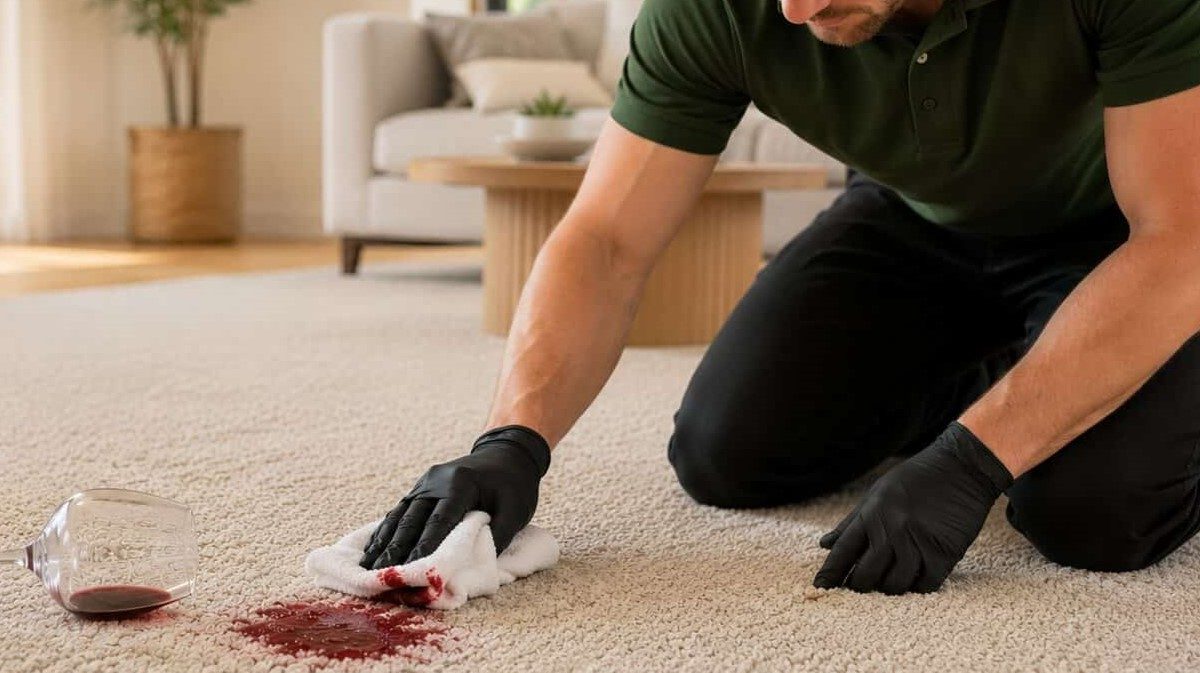
The golden rule – blot immediately, use cold water, and match your cleaning solution to the type of stain. That single principle handles the majority of carpet spills before they become permanent problems. The stain-by-stain methods below cover everything from red wine and coffee to pet urine and mud, with specific guidance for wool and synthetic carpets, and clear direction on when a professional clean is the smarter call.
Before you treat any stain – the four universal rules
Every stain situation is different, but these four principles apply every single time. Ignoring any one of them is the most common reason DIY stain removal fails.
1. Act within 24 hours
The Carpet and Rug Institute’s advice on spills is blunt: act fast. A fresh spill is a “spot” — removable with the right technique. Left too long (24 hours is a common rule of thumb), the residue bonds with carpet fibres and becomes a true “stain” that takes far more effort or professional treatment. Speed matters more than the product you use.
3. Use cold water first
Hot water permanently sets protein-based stains — blood, egg, dairy, and pet urine will bond to fibres if you apply heat. Start with cold water on every stain until you’ve identified the stain type.
2. Blot – never rub
Rubbing spreads the stain outward, pushes it deeper into the pile, and distorts carpet fibres. Always use a clean white cloth or white paper towels and press firmly from the outer edge inward toward the centre. Lift and move to a clean section of cloth with each blot.
4. Patch test every solution
Apply any cleaning product commercial or homemade to a small, hidden area of carpet (behind furniture or inside a wardrobe) and wait 10 minutes before checking for colour transfer or fibre damage. Different carpet materials react differently, and wool carpets require a particularly gentle hand.
The stain removal toolkit – What you actually need
You don’t need a cupboard full of specialist products. These six items cover the majority of household carpet stains:
- Clean white cloths or white paper towels – white only, so you can see how much stain is transferring
- Cold water – your first response to almost every spill
- White vinegar – cuts through odours, food stains, and residue
- Dishwashing liquid (clear, not coloured) helps lift oil-based and tannin stains
- Bicarbonate of soda – absorbs moisture and neutralises odours
- Enzyme cleaner – essential for pet urine; breaks down the uric acid crystals that cause persistent odour
For tougher stains, CHOICE’s independent testing of 21 carpet stain removers rated Peerless Jal Carpet Spotter and Deodoriser the top performer for red wine, coffee, sauce and oil/dirt stains. It’s worth keeping a bottle in the house.
1 tablespoon white vinegar + 1 tablespoon clear dishwashing liquid + 2 cups cold water. Mix in a spray bottle, apply lightly to the stain, blot gently, rinse with clean cold water, and blot dry.
How to clean carpet – Step-by-step deep clean
Beyond spot treatment, carpets need a full deep clean every 12–18 months — the schedule recommended by both the Carpet Institute of Australia and the Carpet and Rug Institute. Here’s the short version.
1. Clear the room and prepare the space
Move furniture off the carpet where possible. For pieces that are too heavy, place aluminium foil or baking paper under the legs — moisture from cleaning can cause timber or metal legs to transfer rust or tannin stains onto wet carpet. Secure or lift any drapes so they don’t absorb moisture during the clean.
2. Vacuum thoroughly – Before you add any liquid
Vacuuming first is non-negotiable. When you add cleaning solution to a carpet with loose dirt still in it, that dirt turns to mud and embeds deeper into the fibres. Vacuum slowly in overlapping passes, working in two directions (north–south, then east–west) to agitate fibres from multiple angles. Pay extra attention to edges and under furniture — these areas accumulate significantly more debris than open floor space.
3. Pre-treat visible stains
Before running a carpet cleaner over the whole room, treat individual stains using the stain-specific methods in the section below. Pre-treating ensures the machine extraction step removes stain residue rather than spreading it across the carpet.
4. Deep clean with a machine or Hot Water Extraction
If you’re hiring a carpet cleaning machine from a Bunnings Hire Shop or hire centre, follow the manufacturer’s instructions for the correct solution dilution. Start in the far corner of the room and work toward the exit so you don’t walk on wet carpet. Move the machine slowly — rushing reduces extraction effectiveness. Trigger the solution on the forward pass; release and extract on the pull-back. Overlap each pass slightly for full coverage. On high-traffic areas, make a second pass without solution (extraction only) to remove any residue.
Hire machine vs. professional hot water extraction: Hire machines run at lower water pressure and heat than professional extraction equipment and recover less moisture, which means longer drying times and less deep extraction. For carpets that are well past the 12–18 month cleaning cycle, or for wool carpets, a professional carpet steam cleaning service delivers a significantly more thorough result.
5. Dry the carpet properly
Damp carpet that doesn’t dry quickly develops a musty smell and risks mould growth in the underlay. To speed drying: open windows and doors to maximise airflow, run ceiling fans or a portable fan over the wet area, and avoid walking on the carpet until it’s fully dry – typically 4–8 hours with good ventilation, longer in humid conditions or during cooler months. Do not replace furniture until the carpet is completely dry.
Stain removal guide by stain type
Each entry below follows the same logic: match the cleaning solution to the chemistry of the stain.
| Stain | How to remove it | Important tips |
|---|---|---|
| 🍷 Red wine stain |
|
Patch test hydrogen peroxide first as it may bleach some carpets. Deep-set tannin stains may require professional steam cleaning. |
| ☕ Coffee stain |
|
Milk proteins require an enzyme cleaner for complete odour and stain removal. |
| 🐾 Pet urine stain |
|
Never use ammonia-based cleaners they can encourage pets to re-mark the area. |
| 🪨 Mud stain |
|
Cleaning wet mud spreads it deeper into the carpet fibres. |
| 🩸 Blood stain |
|
Never use hot water it permanently sets blood stains. |
| 🫙 Grease & oil stains |
|
Avoid rubbing as this pushes grease further into the fibres. |
| 🍅 Tomato sauce & food stains |
|
Work from the outside of the stain towards the centre. |
| 🖊 Ink stain |
|
Never pour rubbing alcohol directly onto the carpet. |
| 🕯 Candle wax stain |
|
Use a warm iron only excessive heat can damage carpet fibres. |
Stain too stubborn to shift at home?
The CarpetRevive teams are IICRC-certified technicians using hot water extraction, with cleaning solutions that are safe around kids and pets once the carpet is dry. Upfront pricing with no hidden fees.
Carpet types and how they affect stain removal
The same cleaning method that works perfectly on a synthetic carpet can permanently damage a wool carpet. Know your carpet type before you treat it.
-
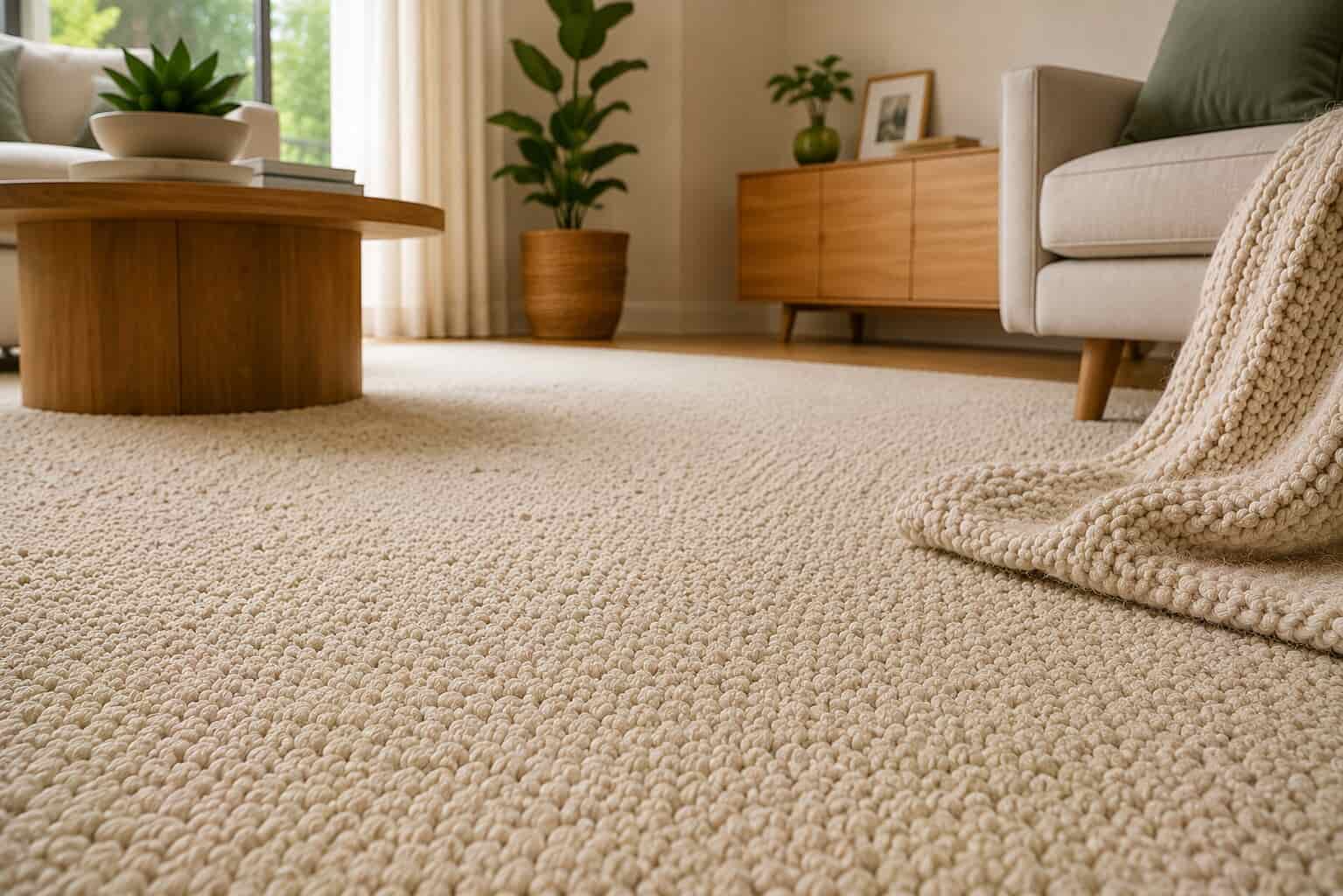
Wool carpets
Wool is a natural protein fibre, naturally resilient and stain-resistant to a degree, but it requires a gentle hand.
- Never use alkaline cleaning solutions (ammonia or some commercial cleaners)
- Never use bleach or hydrogen peroxide
- Avoid over-wetting wool is prone to shrinkage if saturated
- Use pH-neutral or wool-specific cleaning products only
- When in doubt, contact a professional, wool carpet replacement is significantly more expensive than a professional clean
-
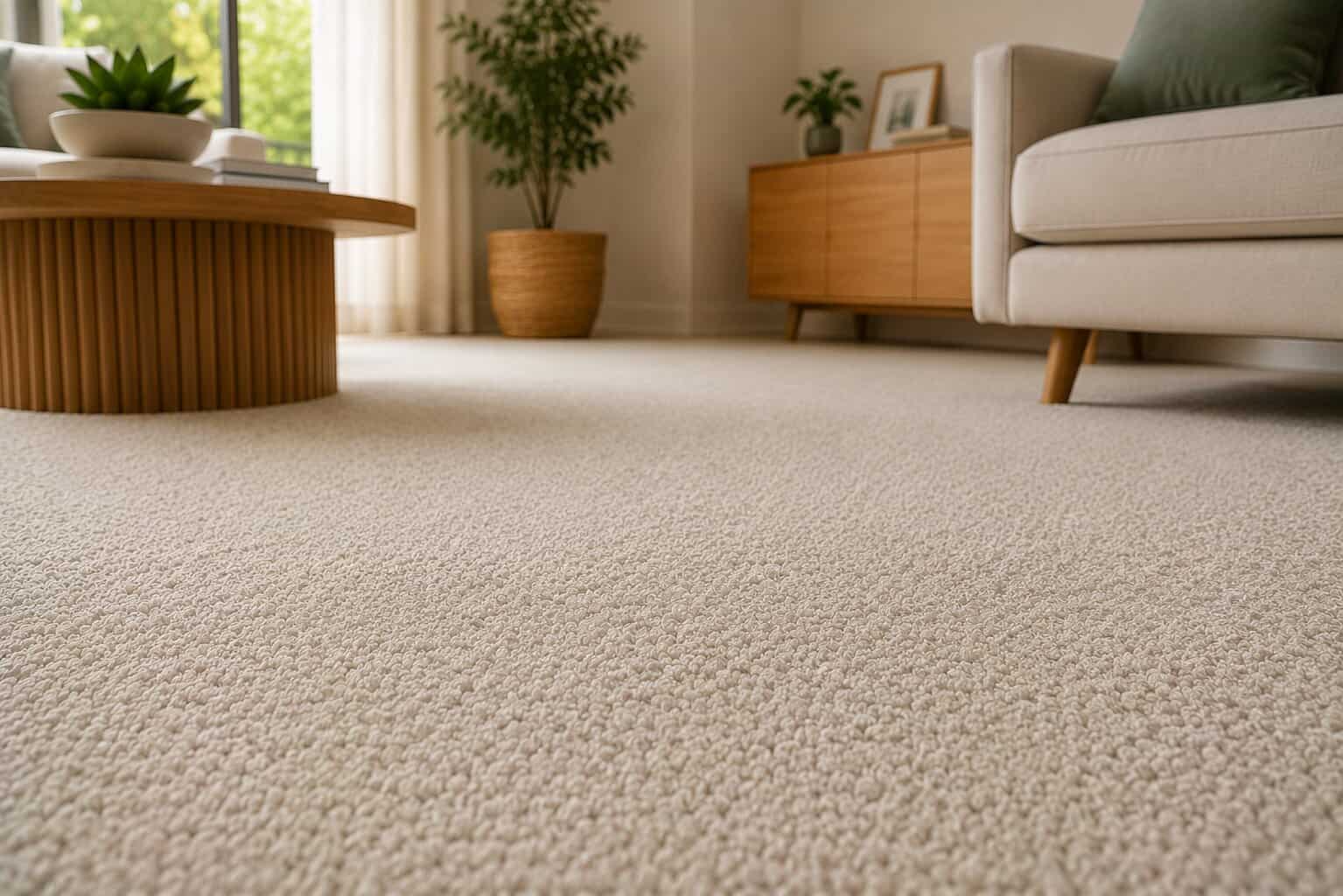
Synthetic (nylon, polyester, polypropylene)
Synthetic carpets are more forgiving. They accept the all-purpose solution well and are less prone to shrinkage.
- Dry faster than wool, making them more tolerant of DIY cleaning
- Polypropylene (olefin) is susceptible to oil-based stains because it is itself an oil-based fibre
- Over-wetting any synthetic carpet risks mould in the underlay always blot up excess moisture promptly
-
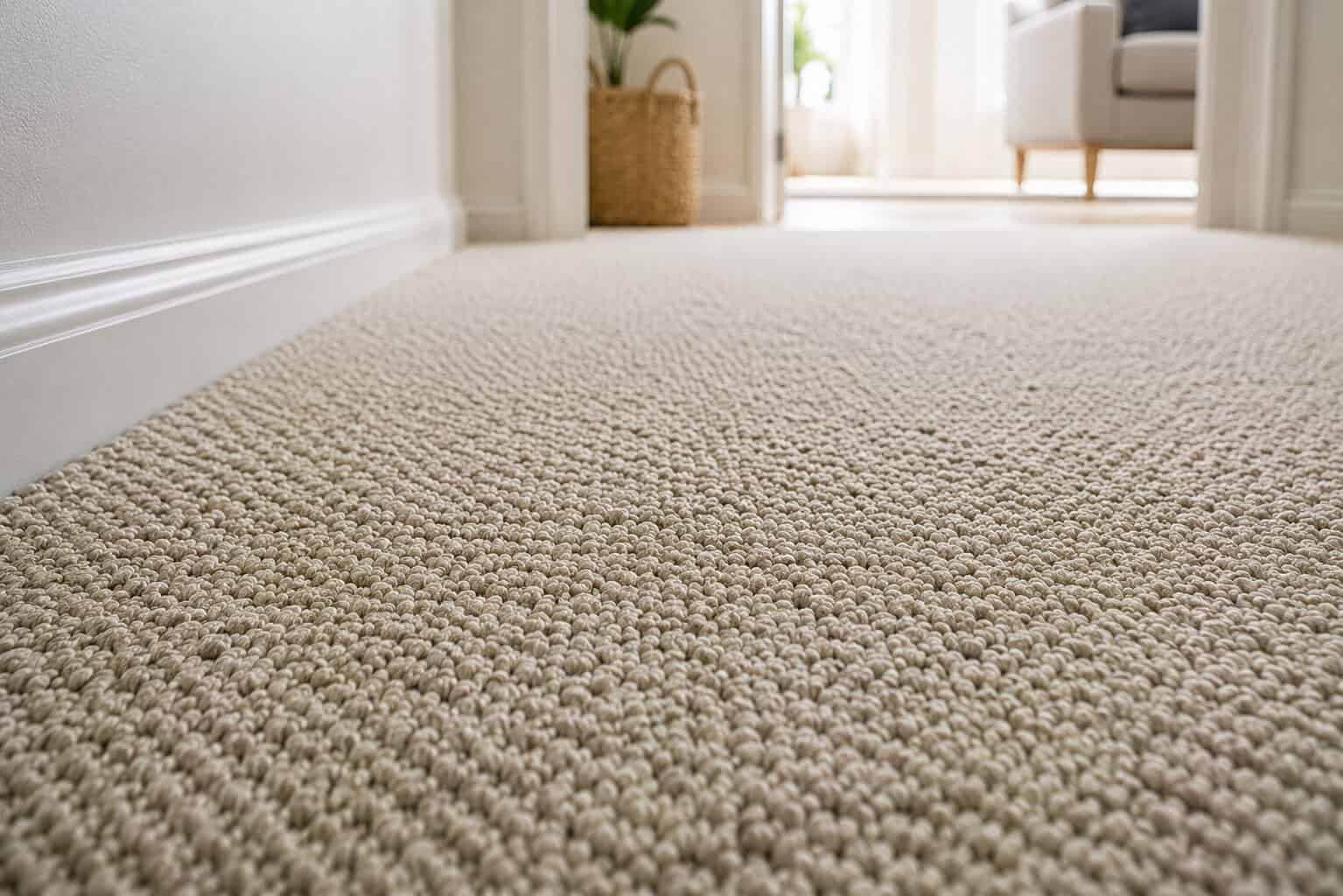
Berber & loop-pile
Loop-pile construction is more sensitive to scrubbing and rubbing than cut-pile carpets.
- Scrubbing can snag and pull loops, causing visible and permanent damage
- Always use a dabbing blot motion only, no brushes
- Work gently and patiently for best results
What not to use on carpet stains
Some DIY combinations are genuinely dangerous or will permanently damage your carpet. None of these mistakes are reversible.
| Combination or action | Why to avoid |
|---|---|
| Bleach on coloured carpet | Permanent colour removal — cannot be undone. |
| Bleach + vinegar | Produces toxic chlorine gas — a genuine safety hazard. |
| Bleach + ammonia | Produces toxic chloramine gas — a genuine safety hazard. |
| Hot water on protein-based stains | Permanently sets blood, dairy, egg and urine into carpet fibres. |
| Scrubbing any stain | Spreads the stain wider and distorts carpet fibres. |
| Ammonia on pet urine | Urine already contains ammonia, reinforcing the odour signal and encouraging pets to return to the same spot. |
| Coloured cloths | Dye transfer from the cloth can create a new stain on the carpet. |
| Always test any cleaning product on an inconspicuous area first. If you’re unsure, use a professional carpet cleaning service rather than risking permanent damage. | |
When DIY isn’t enough – Calling in a professional
Be honest about what DIY carpet cleaning can and can’t achieve. These situations warrant a professional clean:
- The stain is more than 24–48 hours old and hasn’t responded to two DIY treatments
- The carpet is wool — professional hot water extraction with controlled temperature and pH is significantly safer than any hire machine on natural fibres
- Pet urine has soaked through to the underlay — no amount of surface cleaning removes odour that has penetrated the carpet backing
- You’ve used multiple products and the stain has changed colour or appearance — professional assessment is needed before adding more chemicals
- You’re vacating a rental property — carpet cleaning is consistently among the most disputed items in bond claims across Australia, and if carpets show stains or odour beyond fair wear and tear, you can be liable for cleaning costs regardless of how the lease is worded
Our professional carpet steam cleaning service uses professional-grade hot water extraction — the deep-clean method the Carpet Institute of Australia and the Carpet and Rug Institute recommend every 12–18 months. The process runs at higher temperature and pressure than any hire machine, extracts more moisture (meaning faster drying times), and reaches deep into the pile where surface-level cleaning simply can’t.
Book professional steam cleaning in Melbourne, Sydney or Perth
End of lease carpets – What landlords and agents actually check
If you’re cleaning carpets before moving out of a rental, the stakes are higher than a regular household clean. Bond deductions for carpet cleaning are consistently among the top disputed items at the Victorian Civil and Administrative Tribunal (VCAT) and equivalent bodies in other states.
What agents and landlords look for at inspection:
- Visible stains – any mark that wasn’t documented at the start of the tenancy
- Odour – pet smell, smoke, and general mustiness that hasn’t been adequately addressed
- Pile condition — matting and crushing in high-traffic areas that goes beyond normal fair wear and tear
- Overall cleanliness – the standard expected is “reasonably clean” relative to the condition at the start of the tenancy, accounting for fair wear and tear
The legal standard in most states is returning carpets to their documented start condition, allowing for fair wear and tear — in Victoria, a lease clause requiring professional cleaning is only enforceable in limited circumstances. In practice, if carpets show stains or odour, you’ll likely be liable for the cleaning cost either way. See our end of lease carpet cleaning service for what’s involved.
FAQs
Vacuum thoroughly first to remove loose dirt, then pre-treat any visible stains using the appropriate method for that stain type. For a full deep clean, use a carpet cleaning machine with the recommended amount of cleaning solution, working from the far corner of the room toward the exit. Dry thoroughly with good ventilation to prevent mould and musty odours.
For most food and drink stains, a mix of one tablespoon white vinegar, one tablespoon clear dishwashing liquid, and two cups of cold water performs well. Apply lightly, blot gently, rinse with cold water, and blot dry. CHOICE Australia’s independent testing found that a similar homemade recipe outperformed several commercial stain removers that cost significantly more.
Rehydrate the stain first with a small amount of cold water to loosen the dried residue, then apply the appropriate cleaning solution. Old stains typically need multiple treatments and longer dwell time. Enzyme cleaners work particularly well on old organic stains (food, pet urine). If the stain has been there for more than a few weeks, professional hot water extraction gives the best chance of full removal.
Yes, apply baking soda to the stained area first, then spray white vinegar on top. The fizzing reaction helps loosen the stain. Leave for 10–15 minutes, blot thoroughly, and rinse with cold water. This method works well on food stains, mild pet odours, and general freshening. For protein-based stains (blood, pet urine), an enzyme cleaner is more effective than baking soda and vinegar alone.
For most household stains, you don’t need a machine. The blot-and-solution method — applying a cleaning solution, blotting gently, and rinsing with cold water — handles the majority of fresh spills effectively. Bicarbonate of soda is particularly useful for absorbing moisture and neutralising odour. The key is acting quickly and matching the solution to the stain type.
With good ventilation (open windows, ceiling fan or portable fan running), most carpets dry within 4–8 hours after a DIY clean. Hire machines leave more moisture in the carpet than professional hot water extraction equipment, so drying times can extend to 12+ hours in humid conditions or during cooler months. Professional truck-mounted extraction removes more moisture at the source, typically cutting drying time to 2–4 hours.
Never use bleach on coloured carpets (permanent colour removal), hot water on protein-based stains like blood or pet urine (sets them permanently), or coloured cloths (dye transfer can create a second stain). Never combine bleach with vinegar or ammonia — these combinations produce toxic gases. And never rub a stain — always blot from the outer edge inward.
Call a professional when a stain hasn’t responded to two DIY treatments; you’re dealing with a wool carpet; pet urine has soaked through to the underlay; you’re vacating a rental property; or you haven’t had the carpets professionally cleaned in more than 12 months. Professional hot water extraction reaches depths that hire machines and DIY methods simply can’t.
Can’t shift that stain? We can.
The Carpet Revive teams are IICRC-certified technicians using professional-grade hot water extraction – the most effective method for deep stain removal. Cleaning solutions safe around kids and pets once the carpet is dry, and transparent upfront pricing with no hidden fees.
-
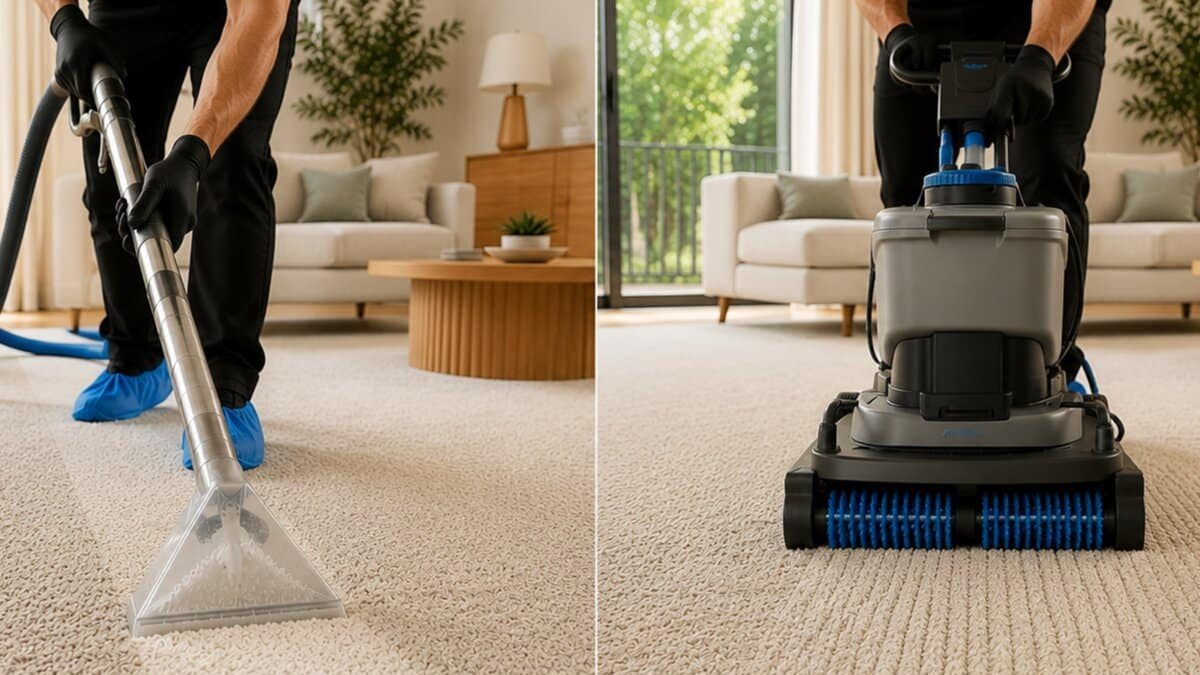
Carpet steam cleaning vs. dry cleaning: which is right for your home?
Steam suits most homes. Dry cleaning suits wool.
-
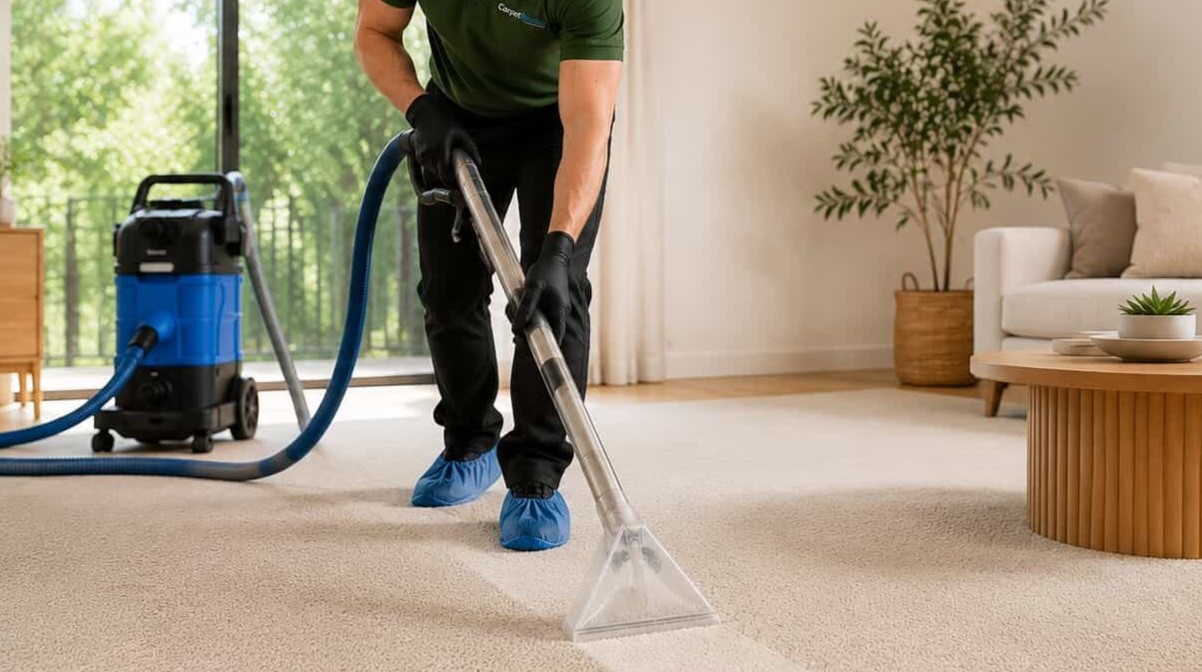
How much does carpet cleaning cost in Australia? (2026 price guide)
Bedrooms $37, living rooms $53, $125 minimum.
